

How to choose cruelty-free skincare products
•Cruelty-free skincare is defined as any product not tested on animals at any stage of its development, from raw ingredient sourcing through to finished formulation. Choosing these products means more than reading a label. It requires understanding certifications, investigating brand ownership, and knowing how global market policies affect a brand’s true status. With 2.63 million animal testing procedures conducted in Great Britain alone in 2024, the scale of the issue is significant. This guide gives you the specific tools and knowledge to choose cruelty-free skincare products with genuine confidence, not guesswork.
What certifications reliably identify cruelty-free skincare brands?
Certification is the most reliable way to verify cruelty-free claims, but not all certifications carry the same weight. Understanding the differences between them is the first step to shopping with confidence.
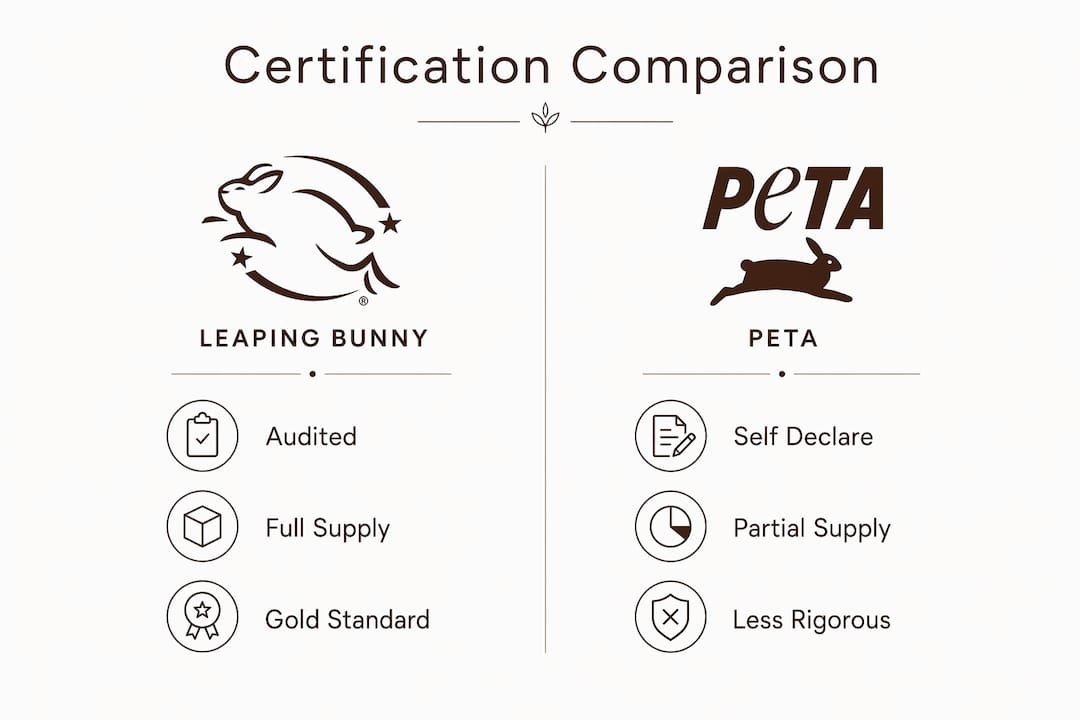
Leaping Bunny certification is widely regarded as the gold standard for cruelty-free cosmetics. It requires brands to commit to no animal testing across their full supply chain, including ingredient suppliers, and to undergo independent annual audits to maintain compliance. This means the certification covers every stage of the product lifecycle, not just the final product. Brands like Pacifica Beauty and e.l.f. Cosmetics hold Leaping Bunny status, demonstrating that ethical skincare options exist across price points.

PETA’s Beauty Without Bunnies programme takes a different approach. It relies on brand self-declaration without requiring third-party supply chain audits, making it a less rigorous standard than Leaping Bunny. That does not mean PETA-certified brands are dishonest, but it does mean the verification process places more trust in the brand’s own reporting. For consumers who want the highest level of assurance, Leaping Bunny remains the stronger choice.
Beyond these two, you will encounter a range of other symbols and phrases on packaging. The Cruelty Free International logo (the Leaping Bunny symbol) is distinct from the PETA bunny logo, and the two are frequently confused. The Choose Cruelty Free (CCF) certification, used primarily in Australia, applies similarly rigorous standards to Leaping Bunny.
Pro Tip: Look for the Leaping Bunny logo specifically, not just any rabbit symbol on packaging. Many brands use generic bunny imagery that carries no certification meaning whatsoever.
Certification comparison: what each standard guarantees
| Certification | Third-party audit | Supply chain coverage | Self-declaration only |
|---|---|---|---|
| Leaping Bunny | Yes, annual | Full supply chain | No |
| PETA Beauty Without Bunnies | No | Brand level only | Yes |
| Choose Cruelty Free (CCF) | Yes | Full supply chain | No |
| Own brand “not tested” claim | No | Unknown | Yes |
Common label terms that mislead consumers
Vague label language such as “not tested on animals in our lab” does not guarantee full supply chain cruelty-free status. This phrase technically means the brand’s own facility does not conduct tests, but it says nothing about ingredient suppliers or third-party testing commissioned elsewhere. Similarly, “against animal testing” is a statement of opinion, not a verified commitment. Treat any claim that lacks a named, audited certification with scepticism.
Does brand ownership affect cruelty-free status?
Brand ownership is one of the most overlooked factors when consumers attempt to identify cruelty-free cosmetics. A brand can hold a legitimate cruelty-free certification whilst being owned by a parent company that actively tests on animals in other markets.
Brands owned by parent companies that conduct animal testing may indirectly support those practices, even if the individual brand’s products are never tested on animals. Purchasing from such a brand contributes revenue to a corporate structure that funds animal testing elsewhere. Whether this matters to you is a personal ethical decision, but it is one worth making consciously rather than by default.
Resources such as Cruelty-Free Kitty and Logical Harmony maintain regularly updated databases that track corporate ownership structures within the beauty industry. These databases flag which certified cruelty-free brands are owned by larger conglomerates with animal testing policies. They are free to use and straightforward to search by brand name.
Pro Tip: Before purchasing from a new brand, search its name alongside “parent company” on Cruelty-Free Kitty or Logical Harmony. The result takes under a minute and can reveal ownership connections that are not disclosed on product packaging.
How to investigate brand ownership in four steps
- Search the brand name on Cruelty-Free Kitty or Logical Harmony and check the ownership section of their brand profile.
- Visit the brand’s own website and look for an “About” or “Our Story” page, which sometimes discloses parent company relationships.
- Search the brand name alongside terms like “owned by” or “acquired by” in a standard web search to surface any recent news coverage of ownership changes.
- Check the brand’s Companies House filing (for UK-registered businesses) to identify the ultimate parent entity.
This process takes only a few minutes per brand and gives you a clear picture of where your money ultimately goes.
How does selling in China affect a brand’s cruelty-free claims?
China’s regulatory framework for imported cosmetics is one of the most significant practical barriers to cruelty-free status for global brands. Brands selling in Chinese physical retail must comply with mandatory post-market animal testing requirements, which means that even a Leaping Bunny-certified brand loses its cruelty-free status the moment it enters Chinese brick-and-mortar retail.
This is not a minor technicality. It means that a brand you have trusted for years may have quietly entered the Chinese retail market and, in doing so, consented to animal testing on its products. The brand’s certification may remain in place in other markets, but its products are being tested on animals in China.
There is, however, an important distinction to understand:
China’s regulatory updates allow imported cosmetics sold via cross-border e-commerce to avoid mandatory animal testing, creating a pathway for brands to access Chinese consumers whilst maintaining cruelty-free status in that market.
This means a brand can sell to Chinese consumers online without triggering the animal testing requirement. The critical question is whether the brand sells through physical retail channels in China, not whether it sells to Chinese customers at all.
To check a brand’s China policy:
- Visit the brand’s website and search for a dedicated “cruelty-free” or “animal testing” policy page.
- Look for explicit statements such as “we do not sell in Chinese physical retail” or “we only sell in China via cross-border e-commerce.”
- Check Cruelty-Free Kitty’s brand profiles, which include a specific field for China market status.
- Contact the brand directly via email if no policy is publicly stated. A genuinely cruelty-free brand will answer this question clearly.
How to practically shop for ethical skincare products
Knowing the theory is only useful if you can apply it at the point of purchase. These steps give you a repeatable process for verifying any brand before you buy.
- Check the Leaping Bunny directory first. The Leaping Bunny online directory is freely searchable and updated regularly. If a brand appears there, it has met the most rigorous cruelty-free standard available.
- Cross-reference with PETA’s Beauty Without Bunnies list. This database covers a broader range of brands and is useful for identifying products that may not hold Leaping Bunny status but have made a formal cruelty-free commitment.
- Use a browser extension or app for real-time verification. Apps and browser extensions that flag cruelty-free status during online shopping are increasingly practical tools for ethically conscious consumers. Extensions like the Cruelty-Free Kitty browser tool display a brand’s status directly on product pages at retailers such as ASOS and Boots.
- Distinguish between cruelty-free and vegan. A product can be cruelty-free without being vegan. Cruelty-free means no animal testing. Vegan means no animal-derived ingredients. Beeswax, lanolin, and carmine are common animal-derived ingredients found in products that carry cruelty-free certification. If avoiding all animal-derived ingredients matters to you, check both the cruelty-free status and the ingredient list.
- Extend your ethics to tools and accessories. Synthetic-only brushes and tools support a fully cruelty-free routine by avoiding animal hair. Brands such as EcoTools produce vegan synthetic brush sets that perform comparably to natural hair alternatives.
Pro Tip: Screenshot or bookmark the Leaping Bunny directory search page on your phone. When you are in a shop and unsure about a brand, a 30-second search is faster and more reliable than reading the packaging.
Cruelty-free vs. vegan: a quick reference
| Term | No animal testing | No animal-derived ingredients |
|---|---|---|
| Cruelty-free | Yes | Not necessarily |
| Vegan | Not necessarily | Yes |
| Cruelty-free and vegan | Yes | Yes |
Key takeaways
Choosing genuinely cruelty-free skincare requires verified certification, parent company scrutiny, and confirmation that a brand does not sell through Chinese physical retail channels.
| Point | Details |
|---|---|
| Prioritise Leaping Bunny certification | It requires annual independent audits covering the full supply chain, making it the most reliable standard. |
| Investigate parent company ownership | Use Cruelty-Free Kitty or Logical Harmony to check whether a certified brand is owned by a company that tests on animals. |
| Verify China market policy | Brands in Chinese physical retail must comply with animal testing laws, regardless of their certification status elsewhere. |
| Distinguish cruelty-free from vegan | Cruelty-free confirms no animal testing; vegan confirms no animal-derived ingredients. Both require separate verification. |
| Use databases and apps | The Leaping Bunny directory and browser extensions make real-time verification fast and accessible at the point of purchase. |
Why I think most consumers are asking the wrong question
By Dionne
Most people shopping for ethical skincare ask “is this brand cruelty-free?” when the more useful question is “how do I know?” The label on the front of a product tells you almost nothing without the verification behind it. I have seen well-intentioned consumers buy from brands carrying a rabbit logo that turned out to be entirely decorative, with no certification body behind it.
The ownership question is where I think the real complexity lies, and where most guides fall short. A brand can be genuinely committed to cruelty-free formulation and still be funnelling revenue to a parent company with a very different set of values. That is not a reason to give up on ethical shopping. It is a reason to spend two minutes on Cruelty-Free Kitty before you spend twenty pounds on a moisturiser.
What I find encouraging is that the tools available in 2026 make this verification process genuinely accessible. The combination of Leaping Bunny’s directory, browser extensions, and transparent brand policy pages means that a consumer who wants to make an informed choice can do so without specialist knowledge. The barrier is not information. It is knowing where to look.
My honest recommendation is to combine cruelty-free verification with ingredient transparency. A brand that publishes its full ingredient sourcing, holds Leaping Bunny certification, and clearly states it does not sell in Chinese physical retail is demonstrating a level of accountability that goes beyond marketing. That combination is the clearest signal of genuine ethical commitment available to consumers today.
— Dionne
Explore Urban-retreat’s cruelty-free skincare range
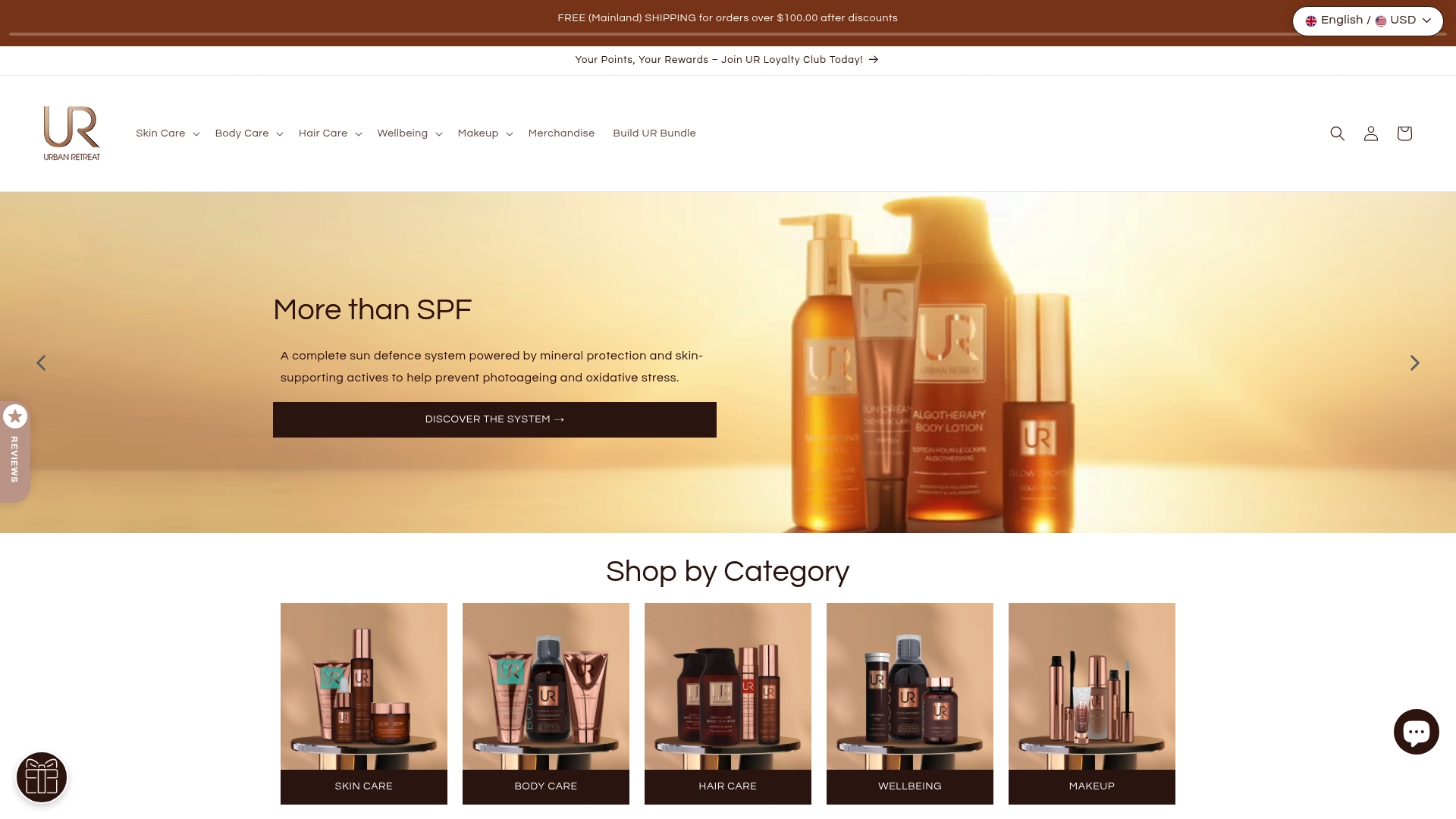
Urban-retreat develops every formulation in its own laboratories, with complete control over ingredient selection and supply chain standards. That means you can shop with confidence, knowing exactly what goes into each product and how it has been made. The Skin Tonic Collagen+ delivers clinically meaningful active concentrations in a formula that meets Urban-retreat’s ethical standards, making it a strong choice for consumers who want visible results without compromise. For a daily cleansing routine that aligns with the same values, the Anti-Imperfections Cleansing Gel offers a science-led formulation with full ingredient transparency. Urban-retreat’s commitment to responsible formulation means ethical skincare options do not require a trade-off on performance.
FAQ
What does cruelty-free skincare mean?
Cruelty-free skincare means the product and its ingredients have not been tested on animals at any stage of development or production. The term is most reliably verified through third-party certifications such as Leaping Bunny.
Is Leaping Bunny better than PETA certification?
Leaping Bunny is considered the more rigorous standard because it requires independent audits and full supply chain coverage, whereas PETA’s Beauty Without Bunnies relies on brand self-declaration without third-party verification.
Can a cruelty-free brand sell in China?
A brand can sell to Chinese consumers via cross-border e-commerce without triggering mandatory animal testing requirements. However, brands selling through Chinese physical retail must comply with post-market animal testing laws, which compromises their cruelty-free status.
Is cruelty-free the same as vegan?
No. Cruelty-free confirms no animal testing, whilst vegan confirms no animal-derived ingredients. A product can be one without being the other, so both claims require separate verification if both matter to you.
How do I quickly verify a brand’s cruelty-free status?
Search the brand name in the Leaping Bunny online directory or on Cruelty-Free Kitty. Both databases are freely accessible and updated regularly, making them the fastest and most reliable verification tools available.
